


November 07, 2025
Fifteen years ago, when I first started using HRV to monitor athlete recovery, many Masters and coaches ridiculed me, labeling me a “scientist.” At the time, very few in the fencing world knew the physiology behind Heart Rate Variability, and this innovative tool was met with strong skepticism. As often happens in our sport, every novelty generates resistance, especially when specific knowledge on the subject is limited.
Today, the landscape has radically changed. In the modern sports world, coaches and athletes constantly seek tools to optimize performance and prevent overtraining. That same HRV that was strongly contested in the fencing environment years ago has become an almost common technology. The measurement of Heart Rate Variability has, in fact, gained increasing popularity as an objective indicator of fitness status and athlete recovery level, confirming what some pioneers had intuited over a decade ago.
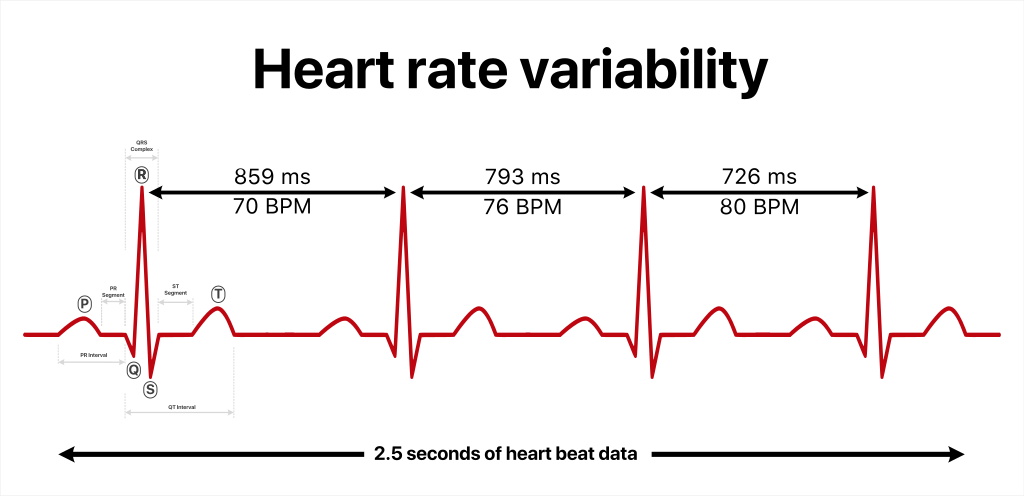
Contrary to what one might think, a healthy heart does not beat like a perfect metronome. HRV measures the subtle variations in the time intervals between one heartbeat and the next. These fluctuations, on the order of milliseconds, are invisible to the pulse but detectable through precise measurement tools.
A practical example: if the heart beats at 60 beats per minute, it doesn’t mean there is exactly one second between every beat. There might be 0.95 seconds between the first and second beat, 1.03 seconds between the second and third, and so on. This variability is a positive sign of cardiovascular health.
HRV reflects the balance between two components of the autonomic nervous system: the sympathetic system, responsible for the “fight or flight” response, and the parasympathetic system, which promotes rest and recovery. When the body is relaxed and well-recovered, the parasympathetic system predominates, leading to greater variability between heartbeats. Conversely, situations of stress, fatigue, or illness activate the sympathetic system, reducing HRV.
Professional athletes use HRV as an internal “thermometer” of their recovery status. A high HRV in the morning generally indicates that the body has adequately recovered from the previous training session and is ready for new stimuli. Chronically low HRV may signal overtraining, excessive stress, or the onset of illness.
One of the most significant advantages of HRV is the ability to personalize training programs. Instead of rigidly following a predetermined plan, coaches and athletes can modify the intensity and volume of training based on daily HRV values. If the morning measurement shows values significantly lower than the personal average, it might be advisable to opt for a lighter workout or dedicate the day to active recovery.
Scientific research has shown a correlation between abnormal HRV values and an increased risk of injury. A constantly stressed nervous system can compromise neuromuscular coordination, reaction times, and tissue recovery capacity, predisposing the athlete to injuries.
Measuring HRV requires tools capable of accurately detecting the R-R intervals of the electrocardiogram, i.e., the time between consecutive R wave peaks. Today, there are several options accessible to athletes:
Chest heart rate monitors represent the gold standard for accuracy, transmitting data to smartphones or dedicated devices. Many modern smartwatches and fitness trackers incorporate optical sensors which, while less precise than chest straps, offer a practical solution for daily monitoring. Measurement is typically done in the morning, immediately upon waking and still in bed, to reduce the influence of external factors.
There is no single “ideal” HRV value valid for everyone. Heart variability indeed varies based on numerous factors: age, sex, genetics, training level, and sport practiced. What matters is establishing one’s personal baseline through regular measurements over several weeks, and then monitoring deviations from this individual average.
Experts suggest paying attention when HRV drops more than 10-15% below one’s weekly average. This drop may indicate the need to reduce training load or investigate possible causes of additional stress.
Numerous elements can impact HRV measurements besides sports training. Sleep quality plays a crucial role: a sleepless night will almost certainly result in reduced HRV. Psychological stress, whether work-related or personal, is reflected in measurements as much as physical stress. Diet, hydration, and the consumption of alcohol or caffeine can significantly alter the values. Even general health status, including subclinical infections, leaves a trace in heart variability.
Despite its usefulness, HRV is not a magic wand. The data must be interpreted in the broader context of the athlete’s condition, also considering subjective perceptions, training performance, and other physiological indicators. HRV also presents notable daily variability even under normal conditions, making trends over several days more significant than single measurements.
It is crucial not to become obsessed with the numbers: HRV is a decision support tool, not a substitute for experience and listening to one’s body. Some athletes risk developing anxiety related to daily values, paradoxically creating additional stress that further worsens HRV.
Scientific research continues to explore the potential of HRV. Artificial intelligence algorithms are beginning to combine HRV data with other metrics to provide increasingly accurate predictions on fitness status and overtraining risk. Integration with other biomarkers, such as body temperature and sleep quality, promises to offer an even more complete picture of the athlete’s condition.
Heart Rate Variability represents a valuable tool in the modern athlete’s arsenal, offering an objective window into the body’s adaptation and recovery processes. When used correctly, in combination with the coach’s experience and listening to personal sensations, HRV can significantly contribute to optimizing performance and preventing overtraining.
Like any technology, its value lies not so much in the numbers themselves, but in the ability to interpret them intelligently and integrate them into a holistic training strategy. In an era where the difference between victory and defeat is often measured in fractions of a second, understanding the signals our body sends us can make the difference between expressing one’s full potential and incurring periods of stagnation or injury.