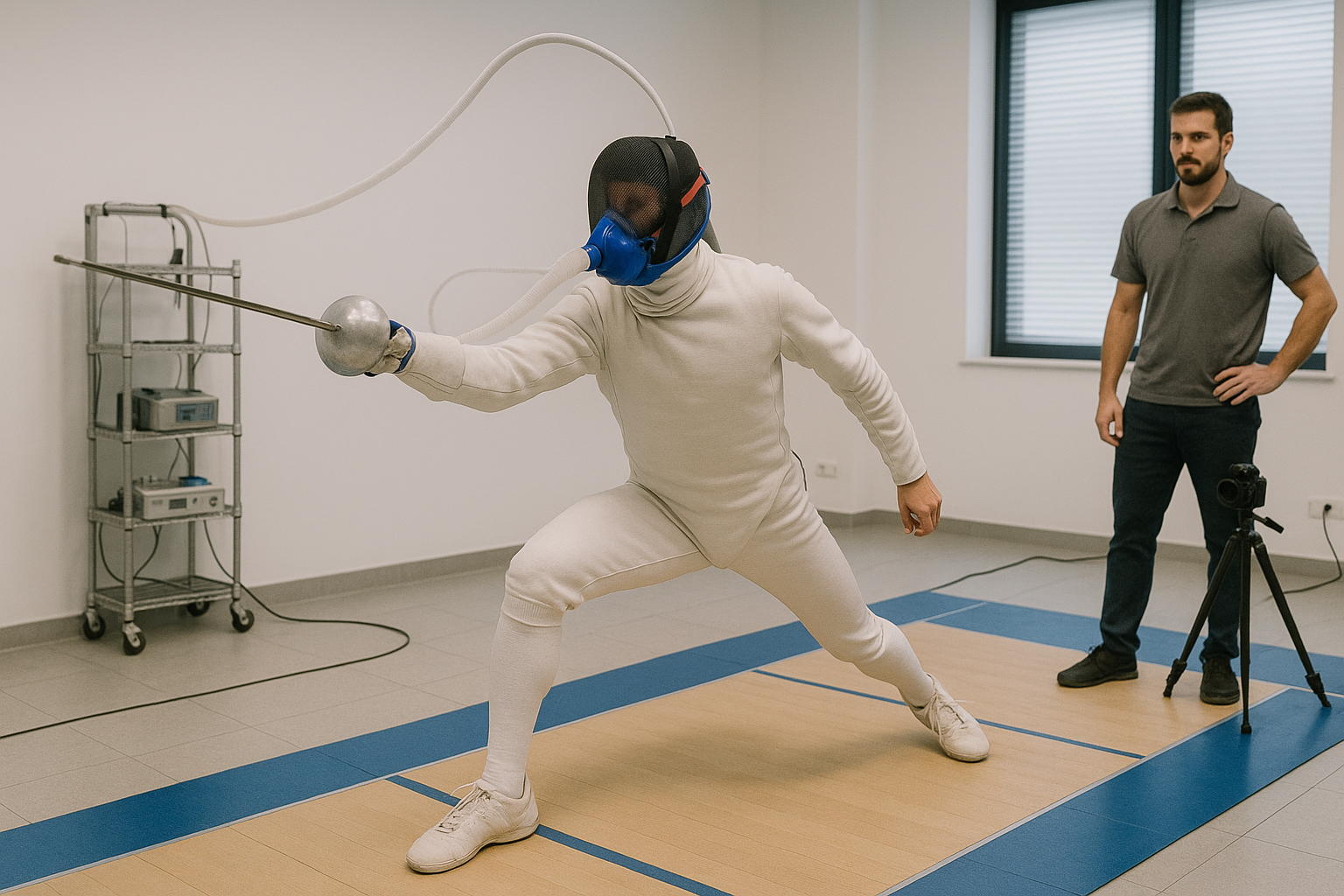
“Physiological demands of fencing: A Narrative Review” Autori: Luke W. Oates, Michael J. Price, Lindsay M. Bottoms. Fonte: Journal of Elite Sport Performance. FullText 73815 (2023).
November 24, 2025
1. Aim of the Review
Objective: To provide an updated overview of the literature regarding the physiological and thermoregulatory demands of fencing.
Practical purpose: To improve training protocols, competition management, and recovery strategies for fencers.
2. Methodology
Search on scientific databases (Pubmed, SPORTDiscus, Google Scholar) from 1985 to 2022.
Inclusion of studies related to all three weapons: épée, foil, and sabre.
Included studies on Pool phase and Direct Elimination (DE) phase.
3. Main Results
3.1 Movement Characteristics
Fencing = high-intensity intermittent sport.
Work/Rest ratios:
Épée: ~1:1 – 2:1
Foil: ~1:1 – 1:3
Sabre: ~1:5 – 1:6
Average single action time:
Épée: 15 sec
Foil: 5 sec
Sabre: 2.5 sec
Analysis technology: modern accelerometers to measure speed, distance, accelerations, and loads.
3.2 Heart Rate
During competition: 75–100% of maximum heart rate (HRmax).
Higher HR in DE matches compared to Pools.
Simulated studies tend to underestimate cardiac load compared to real competitions.
3.3 Oxygen Consumption (VO₂)
Average VO₂ during DE:
~75% of VO₂max.
Average values: 35–47 ml/kg/min for simulated épée; slightly lower in Pools.
Few direct measurements during real competitions, mainly estimates based on HR.
3.4 Blood Lactate Concentration
Generally low (often < 4 mmol/L).
Mixed energy contribution:
Phosphocreatine system predominant (explosive movements).
Important aerobic support in the preparatory and recovery phase.
In longer matches (like épée), progressive fatigue leads to greater reliance on aerobic metabolism.
3.5 Rating of Perceived Exertion (RPE)
Increases significantly in DE phases compared to Pools.
RPE differences detected between upper and lower limbs (weapon/arms more fatigued, but legs equally stressed).
3.6 Thermoregulation
Under-studied issue:
Full equipment = major obstacle to heat dissipation.
Gastrointestinal temperatures > 39°C observed.
Possible negative effects on performance and fatigue perception during prolonged competitions.
Fencing heavily taxes both the alactic anaerobic (phosphocreatine) and aerobic systems.
Training programming:
Develop aerobic capacity for long-term endurance (9-11 hour competitions).
Focus on recovery speed between matches.
Integrate cooling protocols (cooling strategies) during dead times between bouts.
Recommended measurements for monitoring:
Heart rate
RPE
Body temperature
Summary Table
Area
Key Result
Heart Rate
75–100% HRmax
Average VO₂
~75% VO₂max
Lactate
Low (< 4 mmol/L)
Energy System
Phosphocreatine + Aerobic
Movements
4–10% high intensity, 40–50% moderate
Thermoregulation
Critical, risk of >39°C core temperature
Recommended Strategies
Targeted strength and aerobic training
Final Consideration: This study confirms that fencing is an extremely complex sport at a physiological level, requiring an integrated management of energy conditioning, mental endurance, and thermoregulation to optimize competitive performance.