“Physiological responses and energy expenditure during competitive fencing” (Milia et al., Applied Physiology, Nutrition and Metabolism, 2013)
November 10, 2025
Study Summary: The Physiology of Fencing Unveiled
1. Introduction: Beneath the Fencer’s Mask
Beneath the mask, between a lunge and a parry, a fencer’s body is a metabolic reactor. But what energy engines power it? And at what intensity? For years, the answer to these questions has been largely “speculative,” based more on observation than on concrete physiological data. Understanding energy expenditure is crucial for optimizing training and maximizing performance.
The aim of this research was therefore clear and precise: to measure aerobic energy expenditure and the contribution of anaerobic metabolism during a realistic simulation of a fencing bout. To fully appreciate the scope of the results, it is useful first to understand the fundamental physiological concepts that govern energy production in our body.
2. Key Concepts for Understanding the Study: The Human Body’s “Engines”
To understand how an athlete produces energy, we can imagine that the human body has two main “engines,” each with specific characteristics.
Aerobic and Anaerobic Metabolism: These two energy systems work synergistically to fuel our activities.
Characteristic
Aerobic Metabolism (The Marathon Runner)
Anaerobic Metabolism (The Sprinter)
Type of “Fuel”
Slow and sustainable. Uses oxygen to burn fats and carbohydrates efficiently.
Fast and short-lasting. Provides immediate energy without the need for oxygen, but is quickly exhausted.
When it is used
Long-duration activities at low or moderate intensity (e.g., endurance running, cycling).
Sprints, maximal efforts, and short-duration explosive actions (e.g., weightlifting, sprinting).
Sports Example
A marathon runner running for hours.
A sprinter sprinting for less than 10 seconds.
The Anaerobic Threshold (AT): We can think of the anaerobic threshold as the “redline” of the aerobic engine. It is the turning point where exercise intensity becomes so high that the aerobic system alone can no longer meet the energy demand. At this point, the body begins to rely much more significantly on the anaerobic system to bridge the energy gap.
Blood Lactate (BLa): Often mistakenly perceived only as a waste product, lactate is actually a key indicator of the activation level of anaerobic metabolism. When the anaerobic system is working intensely, the concentration of lactate in the blood increases. Measuring BLa levels therefore allows researchers to quantify the extent of anaerobic effort.
With these concepts in mind, we can now analyze how researchers applied this knowledge to study physical effort in fencing.
3. The Experiment: How They Measured Effort in Fencing
To obtain accurate data, researchers followed a rigorous and well-defined protocol.
The Participants: The study involved 15 experienced fencers (13 males and 2 females), all with years of training and participation in national or international competitions.
The Two-Phase Method: The experiment was structured in two distinct moments to ensure measurement accuracy.
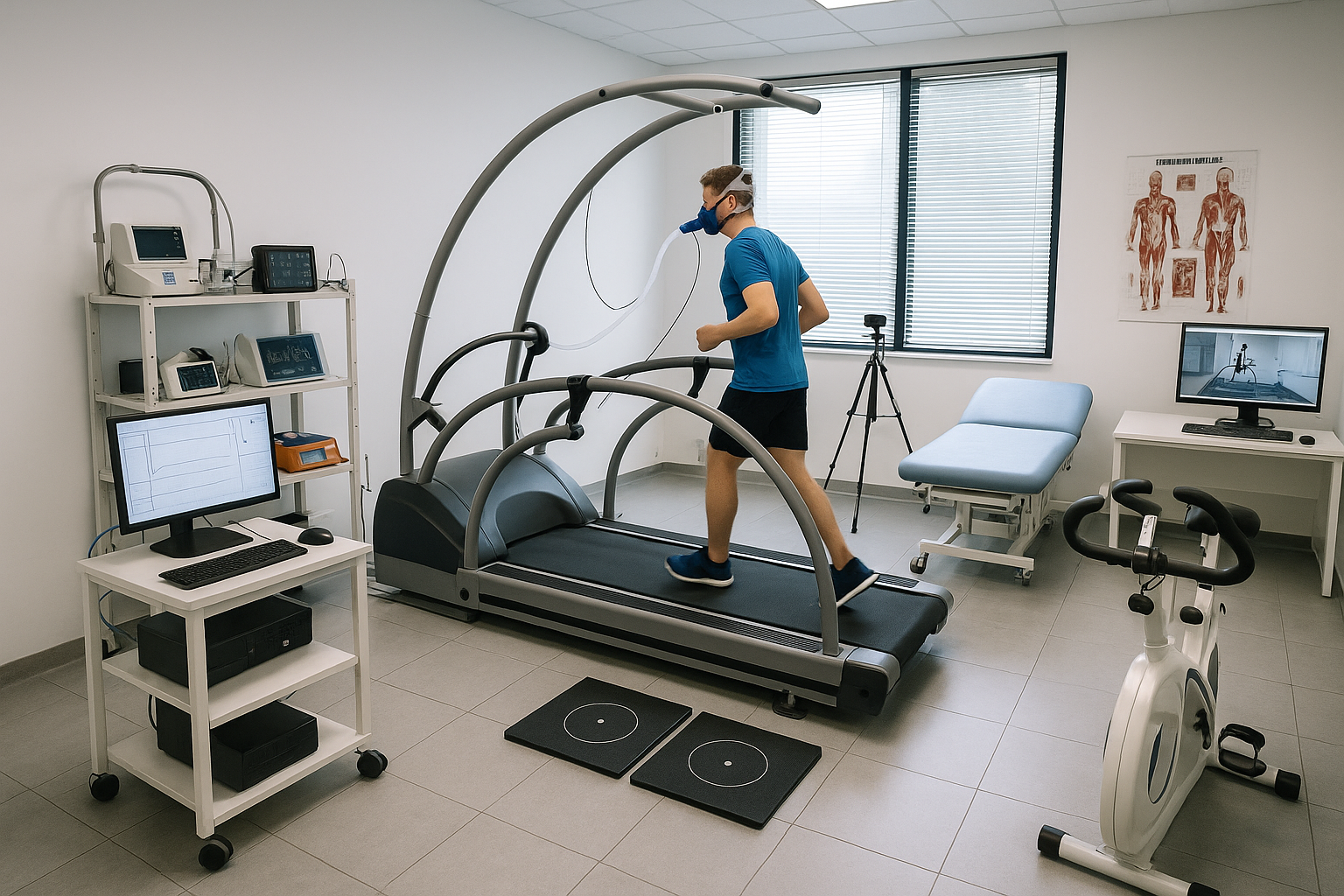
Preliminary Test: Initially, each athlete performed a maximal treadmill test. This test served to establish individual reference values, such as maximum oxygen consumption (V̇O2max) and, above all, the personal anaerobic threshold (AT) of each fencer, a crucial reference point for correctly interpreting the effort during the simulation.
Bout Simulation: On a different day, the athletes participated in a fencing bout simulation, structured exactly like a real competition: three 3-minute bouts, separated by 1 minute of recovery.
What Was Measured: During the simulation, the athletes wore a portable metabolic analyzer to measure several key physiological variables:
Oxygen Consumption (V̇O2) and Carbon Dioxide Production (V̇CO2): Direct indicators of aerobic metabolism activity.
Heart Rate (HR): A measure of cardiovascular system effort.
Blood Lactate (BLa): Blood samples were taken to measure lactate concentration, the main indicator of lactic anaerobic metabolism.
Energy Expenditure (EE): Calculated in kilocalories per minute (kcal/min) to quantify the total energy cost of the activity.
This approach allowed for a complete and detailed picture of the physiological responses during a combat.
4. Key Results: What the Researchers Discovered
The analysis of the collected data revealed fundamental insights into the physiological nature of fencing, constructing a clear and surprising narrative.
Result 1: Fencing is a Moderate, but Demanding, Intensity Activity. The average energy expenditure (EE) during the simulation was 10.24 ± 0.65 kcal·min−1 (corresponding to 8.6 ± 0.54 METs). Although this intensity is classified as “moderate” for high-level athletes, it represents a very significant absolute energy expenditure. This is explained by the fact that the studied athletes were very well trained, with a high anaerobic threshold (AT) of about 78% of their V̇O2max. Consequently, even when working below the threshold, their “engine” burned a remarkable amount of energy.
But this overall data doesn’t tell the whole story. To understand it, we must look at how the body’s two engines contributed to this effort.
Result 2: A Balance between the Two “Engines.” The study clearly showed that fencing does not rely on a single energy system but moderately taxes both.
Aerobic System: Oxygen consumption (V̇O2) consistently remained below the individual anaerobic threshold (AT). Heart rate (HR) also stayed below the threshold for most of the time, with the exception of the final bout, when, due to accumulated fatigue, it slightly exceeded the AT value.
Anaerobic System: At the same time, blood lactate levels (BLa) increased significantly, peaking at 6.9 ± 2.1 mmol·L−1. This value demonstrates a clear and important contribution from the anaerobic system to sustain the explosive actions of combat.
This dualism is the physiological core of fencing: an activity sustained by a solid aerobic base, but punctuated by peaks of anaerobic effort that determine the decisive actions. However, the analysis becomes even more interesting when two physiological “paradoxes” emerge that challenge expectations.
Result 3: Two Surprising Discoveries. Researchers observed two phenomena that, at first glance, seem contradictory.
The Lactate Paradox:Why was lactate high if the athletes were operating below their anaerobic threshold (determined by running)? The most probable hypothesis is that fencing intensely engages the arm muscles. Arms have a higher concentration of fast-twitch muscle fibers, which naturally produce more lactate than the leg muscles, predominantly used in the treadmill test.
The Heart Rate Paradox:Why did heart rate continue to rise progressively during the bout, unlike oxygen consumption which remained stable? This phenomenon suggests a “dissociation” between heart rate and actual metabolic effort. In intermittent sports like fencing, HR can overestimate the effective intensity and is therefore not a reliable indicator when used alone.
These two phenomena are not isolated events but two sides of the same coin: the intermittent, upper-limb dominated nature of fencing, which makes it physiologically unique.
5. Conclusions: Practical Lessons for Athletes and Coaches
The findings of this study translate into valuable guidance for improving athletic preparation in fencing.
Program Hybrid Training: Endurance and Explosiveness. Since fencing moderately taxes both the aerobic system (with V̇O2 below threshold) and the anaerobic system (with lactate peaks at 6.9 mmol·L−1), training programs must be balanced and aim to develop both energy capacities to sustain both the duration of the bout and the explosiveness of the actions.
Technique and Skill Reign Supreme (but Physiology Matters): The data suggest that success in fencing depends primarily on superior technical and tactical skills, rather than exceptional physiological capacities. However, a solid athletic base is the indispensable foundation for allowing technique and tactics to be expressed optimally throughout the duration of a tournament.
Caution with Heart Rate Monitoring: As demonstrated by the “Heart Rate Paradox,” coaches must be aware that relying exclusively on HR to assess training intensity in fencing can be misleading. This data needs to be integrated with other measurements or perceptions of effort.
Train Recovery: The Real Challenge Between Bouts. The study highlighted that not only is the minute between bouts insufficient for complete recovery, but even a final recovery period of three minutes did not allow physiological variables to return to rest levels. Therefore, training the capacity for rapid recovery becomes a crucial and specific goal of preparation.
In conclusion, studies like this are essential because they provide a solid scientific basis on which to build more effective training methodologies, transforming “speculations” into concrete knowledge to advance sports science and athlete preparation.